Insight · Dahabiya
Luxury Dahabiya Cruises — Trade Briefing for Tour Operators
This briefing sets out the operational, commercial and logistical considerations for packaging and operating luxury Dahabiya cruises on the Nile for your clients. It covers vessel types, seasonal windows, port handling and the DMC services you will need.
Class A · Ministry of Tourism
#718
#90255546
Cairo · Luxor · Aswan · Red Sea · Alexandria
1988
Luxury Dahabiya cruises are a distinct product in Egypt programmes: low-capacity, sail-led (with auxiliary engines) vessels that prioritise privacy, flexibility and access to smaller moorings. For tour operators and resellers, Dahabiyas can be sold as per-cabin inventory or as full-boat charters, and they function best as integrated land-and-river packages linking Luxor and Aswan. The following sections explain what to consider when pricing, routing and operating Dahabiya offerings.
What are the common vessel types and capacities I will encounter?
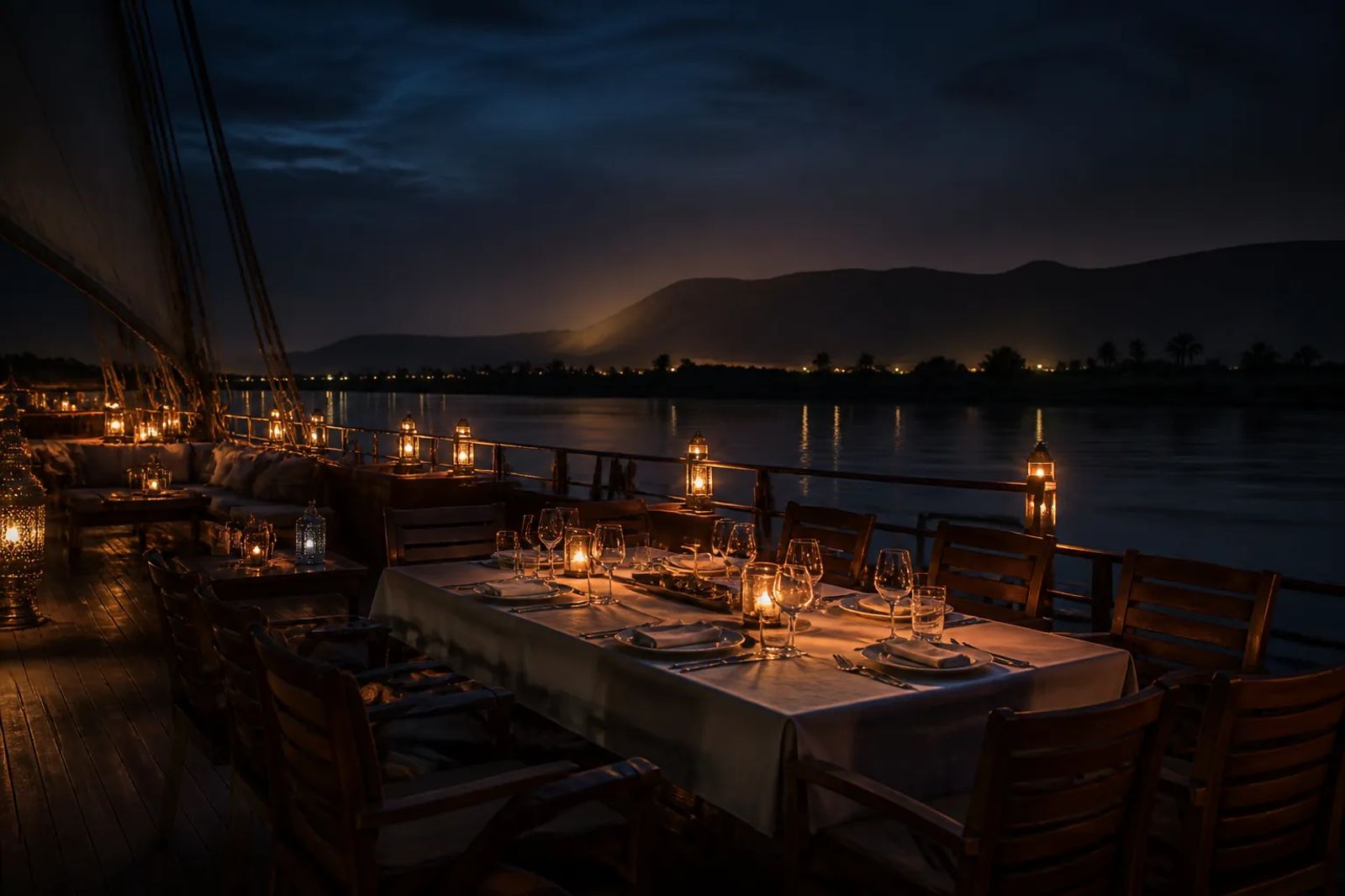
Modern Dahabiyas are boutique vessels that reference the 19th-century traditional sailing boats while providing contemporary safety and comfort. Typical configurations include 4–12 cabins (commonly 6–10 cabins), with guest capacities ranging from 8 to 24 passengers. Layouts vary between single-level and two-level accommodation; many feature a large shaded deck, a lounge/library, and open dining areas for flexible F&B programming.
Key vendor checks for contracting: up-to-date safety certificates, marine insurance, lifesaving appliances, onboard sanitation and waste handling, engine servicing records (for auxiliary engines), and trained crew with valid licences. For premium programmes, request recent photos of cabins and public areas, a full galley menu sample and references from recent charter clients.
Which itineraries and durations sell best for premium clients?
Most commercial Dahabiya itineraries run between Luxor and Aswan (or vice versa) over 3–7 nights. Typical routings include:
- 3–4 nights: Luxor – Esna – Edfu – Kom Ombo – Aswan (faster pace, tendering at small sites)
- 4–6 nights: Leisurely Luxor to Aswan with extended stops at Karnak, Luxor Temple, Esna lock passages, Kom Ombo and Philae
- 6–8+ nights: Private-charter options extending into Upper Egyptian villages, sandbanks and Nubian community visits, or combined with a short Lake Nasser leg
Operators position Dahabiyas on exclusivity and time-of-day access: dawn/late-afternoon temple visits reduce crowd exposure and are popular with higher-paying clients. For packaged programmes, align Dahabiya segments with pre- or post-stays in Luxor/Aswan hotels to control transfers and timing.
When is the optimal season and what seasonal adjustments should I plan?
Primary season runs from October through April: daytime temperatures are mild, winds are more predictable and outdoor deck use is comfortable. May–September sees high heat and reduced marketability for luxury travellers; if you sell summer departures, price conservatively and emphasise extended evening and early-morning activity windows.
Important seasonal considerations: Ramadan affects meal service schedules and opening hours at some sites; national holidays (Egyptian Independence/Republic days, Coptic Easter) can affect availability and local staffing. Always confirm vessel availability early for high season and school breaks.
What port and permit logistics are specific to Dahabiya operations?
Dahabiyas use smaller moorings and sandbanks, which is a product advantage but requires detailed coordination:
- Esna Lock: transits require scheduling — factor in lock fees and potential delays.
- Private moorings and sandbanks: confirm permission from local port authorities and landowners where applicable.
- Archaeological site access: exclusive or timed entries must be arranged with the Ministry of Tourism and Antiquities and local site management; private Egyptologist fees and entrance tickets are additional line items.
For operational reliability, your DMC should handle all port clearances, crew overnights, provisioning and waste removal. Consider including contingency time in itineraries for weather-related delays or riverlevel variations.
What DMC services do I need to secure to operate Dahabiya programmes successfully?
A reliable local partner should deliver a package of services that you can sell as a turn-key product. Core services include vessel contracting, certified Egyptologist guides, airport and ground transfers, baggage handling at moorings, site entry management and any required charter permits. For product differentiation, add shore experiences such as private temple visits, Nubian village programs and tailored wellness or culinary activations.
Discovery Tours Egypt commonly bundles Dahabiya operations with hotel nights and land excursions; discuss integration with our Nile cruise operations and bespoke land work through tailor-made itineraries when you require combined confirmations and single-supplier responsibility.
How should I price and position Dahabiya products to the market?
Two commercial models prevail: per-cabin rates (published or net) and private-boat charters. Key cost drivers are vessel season, crew wages, fuel/engine use (for auxiliary propulsion), permits for private site access, exclusive guide fees and food & beverage provisioning. Peak-season surcharges, minimum-night requirements and a charter security deposit are normal. Position Dahabiya for clients who value privacy, flexibility and cultural access; upsell private guided tours, exclusive dining and extra excursions.
Operational clarity, early confirmations and a DMC that manages the Nile-specific logistics are essential to delivering consistent product quality. If you would like a commercial proposal or sample itineraries and pricing for cabins or full-boat charters, request rates and we will prepare options aligned to your client profiles and travel windows.
Request net rates or contact our trade team to discuss vessel availability, sample pricing and bespoke itineraries for your next Egypt programme.