Insight · Nile cruise
Nile Cruise Options for Tour Operators
This briefing defines the core Nile cruise product types in Egypt and the operational considerations trade partners need when programming routes between Luxor and Aswan, including Dahabiya options.
Class A · Ministry of Tourism
#718
#90255546
Cairo · Luxor · Aswan · Red Sea · Alexandria
1988
This briefing equips travel trade partners with the product knowledge and operational checks you need to sell Nile cruises confidently. It focuses on the common product types, typical itineraries (Luxor–Aswan), seasonal constraints and logistics, plus practical supplier notes that affect pricing, contracts and passenger experience.
What Nile cruise product types should I offer my clients?
For agents the market splits into three clear categories:
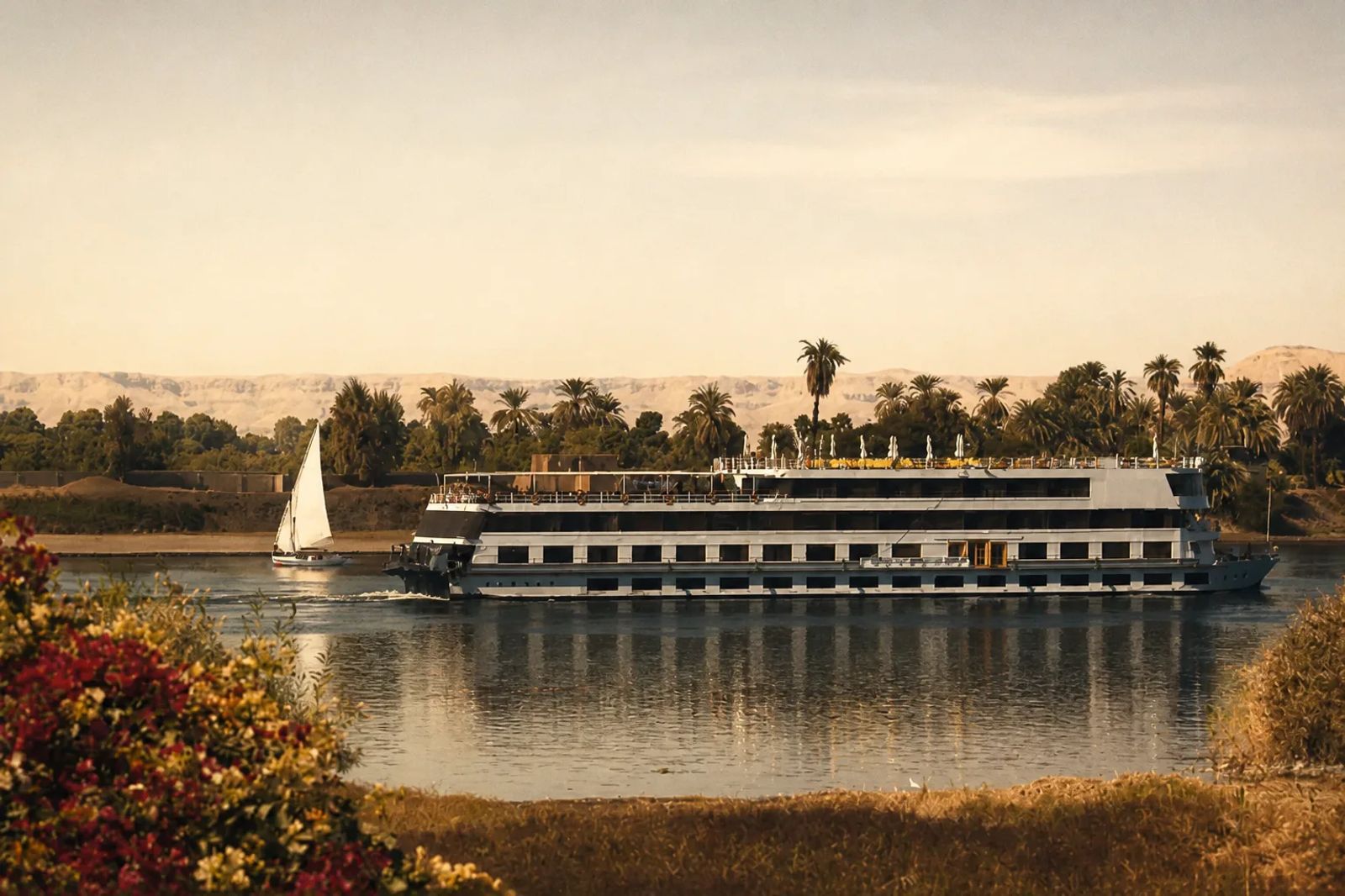
- Classic motor cruise ships (4–5 star): capacity typically 40–150 passengers, fixed itineraries of 3–4 nights between Luxor and Aswan. These are the workhorses for FITs and groups and include amenities such as sun decks, restaurants and small spas.
- Dahabiya and sailboats: traditional wooden vessels for small groups (6–24 pax). They sail at a slower pace and are sold as premium, bespoke experiences with flexible embarkation points and curated shore calls.
- Private charters and luxury liners: fully private commissions of either classic ships or luxury yachts; suitable for high-net-worth travellers, incentive groups or themed programmes (history, wellness, conservation).
To operationalise these options we operate direct Nile cruise operations and can supply deck plans, cabin configurations and supplier contracts to help you cost packages accurately.
How do I match vessel type to client profile and programme goals?
Match by travel style, group size and onshore priorities.
- Families and larger groups: classic cruise ships with pools and interconnecting cabins, standard shore excursions and flexible dining. These vessels handle group logistics and seat-count variations efficiently.
- Luxury couples and small groups: Dahabiya or private charter for privacy and a slower itinerary with bespoke cultural experiences. Use these for premium upsells: private temple access, bespoke menus, or heritage-focused talks.
- MICE and incentives: larger ships with event spaces, or full yacht charters for private dining and team-building on deck. Coordinate with our tailor-made programme team for on-board branding and bespoke shore team activities.
What are the core seasonal and route-related considerations?
Seasonality and Nile conditions directly affect comfort, availability and pricing:
- High season: October to April — pleasant temperatures (20–28°C), peak demand for Luxor and Aswan sites, higher inventory prices, and fuller flight schedules (LXR, ASW).
- Low season: May to September — temperatures regularly exceed 35°C in June–August; consider afternoon site visits and air-conditioned transport to protect clients from heat exposure.
- Wind and sand: khamsin events (short-lived sandstorms) occur mostly in spring and can disrupt small-boat operations; have contingency plans for shore excursions.
- Water and locks: cruises pass the Esna lock; schedule buffer times for lock transit and local management procedures which can vary by operator.
What logistics should I check before confirming a booking?
Checklist for reliable operations:
- Air–ship transfers: coordinate flight times into Luxor (LXR) or Aswan (ASW) with embarkation and disembarkation slots. Morning flights are usually preferable for embarkation day.
- Road transfers and private vehicles: ensure vehicle size matches passenger luggage and group size; for transfers we organise door-to-ship movement and can supply coaches or VIP transfers through our transfer services.
- Egyptologist guides and site permits: certified guides are mandatory at major sites (Valley of the Kings, Karnak, Philae). Private after-hours access, photography permits or filming require advance application to the Antiquities Sector; lead times can be 4–6 weeks.
- Medical and safety planning: advise clients on heat management, hydration and travel insurance. Ships carry basic medical kits; medevac insurance clauses should be considered for remote charters.
How should I price and contract Nile cruise components?
Key commercial points: deposit schedules, cancellation windows (season-dependent), guaranteed minimum passenger numbers for group pricing, and inclusions (meals, guiding, excursions, port fees). Confirm whether shore excursions are included or sold as optional extras; private guiding and special access should be budgeted separately.
Which shore experiences add clear commercial value?
Sellable extras that increase per-passenger yield:
- Hot-air balloon flight over Luxor (pre-dawn departures from Luxor West Bank).
- Private, escorted visits to Karnak or Valley of the Kings with an Egyptologist — permits required for exclusive entry times.
- Community visits and curated local dining experiences on the West Bank or at Kom Ombo and Edfu for immersive, bookable moments.
For partners building multi-centre programmes consider adding Lake Nasser extensions (Abu Simbel) or overland connections to Aswan and the Red Sea. Where applicable, integrate hotel nights at embarkation/disembarkation points; we can supply inventory and contracting via our hotel services and bespoke shore arrangements.
We use standard supplier contracting, can pre-clear permits on your behalf and provide operation-ready documentation (run sheets, emergency contacts, coach manifests and Egyptologist CVs) to simplify on-the-ground execution.
If you would like detailed rates, deck plans or a sample contract for a specific vessel or Dahabiya programme, request a tailored quote. Contact us through Request net rates and our operations team will prepare availability, costing and the permitting timeline for your proposed dates.