Insight · Nile cruise
Nile River Cruises: Operational Briefing for Trade
This briefing sets out the operational, seasonal and programme considerations for Nile river cruises in Egypt for your clients. It covers vessel types, typical itineraries, shore logistics and simple risk mitigation.
Class A · Ministry of Tourism
#718
#90255546
Cairo · Luxor · Aswan · Red Sea · Alexandria
1988
This briefing is designed for tour operators, travel agents and MICE planners building Nile river cruise programmes. It focuses on operational clarity—vessel categories, common itineraries, port and lock logistics, seasonality, and practical recommendations for combining river cruises with Cairo or Lake Nasser extensions.
What vessel types and capacities should I specify for different client profiles?
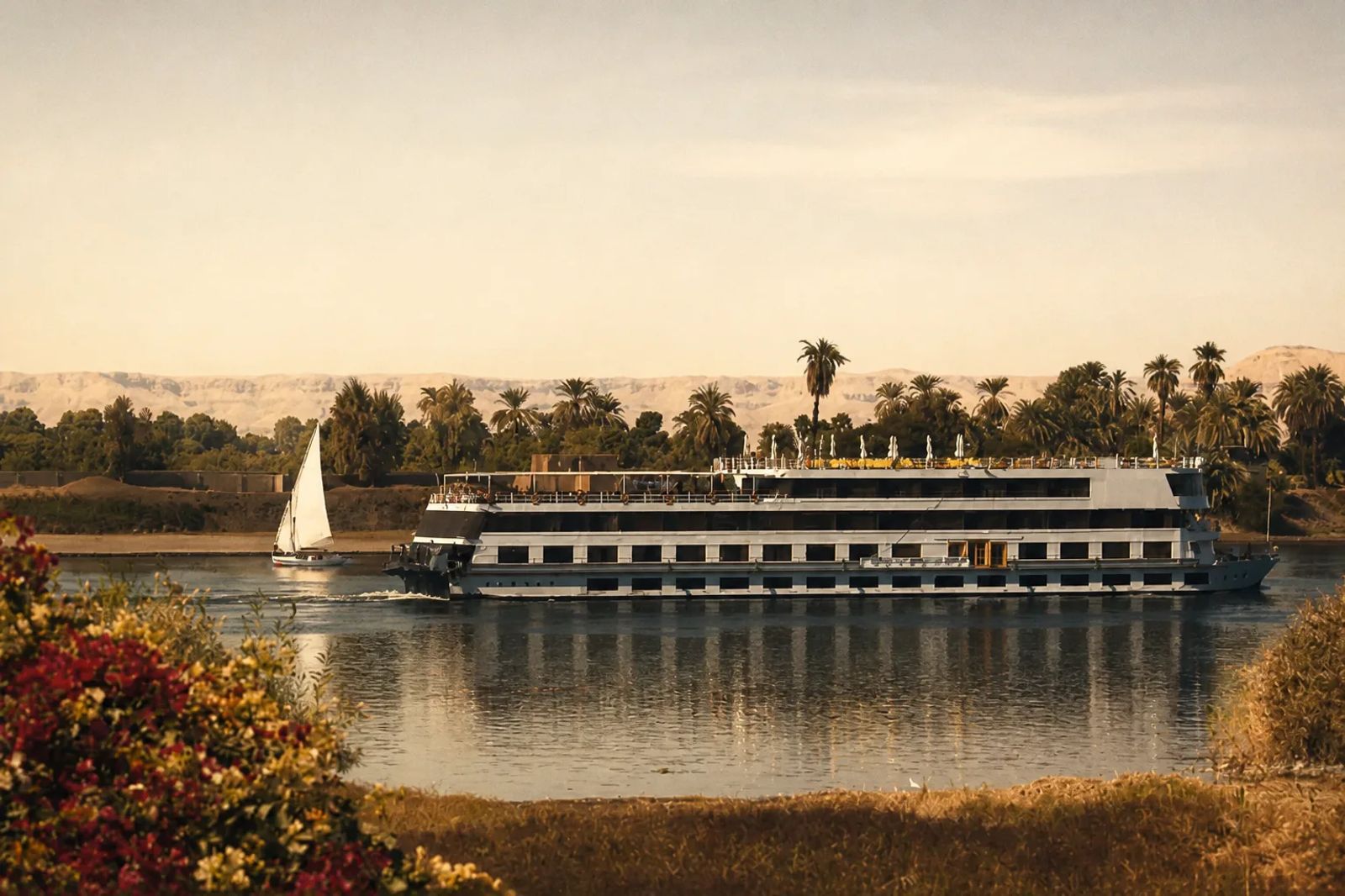
There are three common vessel categories to match to client expectations and ground logistics:
- Large motor cruise ships (capacity 70–180 pax): cost-efficient for groups, good public facilities, fixed berthing at established quays in Luxor and Aswan. Best for FITs and larger groups requiring steady inventory and onboard conference space.
- Boutique dahabiya and sailboats (8–20 pax): low-impact, slower-paced itineraries that call at smaller river berths and private landings; useful for premium or tailor-made programming where exclusivity and shallow-draft access matter.
- Lake Nasser vessels (for Abu Simbel): separate fleet with different provisioning and security protocols; include longer transits and often different embarkation ports (Aswan or Wadi Halfa for specific itineraries).
Coordinate maximum group size with docking capacity in Luxor, Esna and Aswan, and confirm tendering arrangements for smaller berths.
Which standard itineraries should I offer and how do they differ operationally?
Standard product lengths and operational notes:
- 3–4 nights (Luxor–Aswan or Aswan–Luxor): Typical for squeeze itineraries; includes Karnak, Luxor Temple, Valley of the Kings, Edfu (by carriage), Kom Ombo and Philae. Useful as premium add-on to Cairo fly-ins.
- 7 nights (round or end-to-end): Allows fuller pacing with additional cultural stops, Nubian village visits and optional hot-air ballooning in Luxor.
- Lake Nasser cruises (4–7 nights): Designed specifically to include Abu Simbel; operationally requires separate port clearances and different safety/provisioning plans.
Factor in the Esna lock transit (between Luxor and Edfu) when planning daily schedules—locks can create delays and require night navigation on some departures.
How should I schedule shore excursions to reduce heat and crowd impact?
Plan excursions to reduce client exposure to midday heat and to make use of timed entry where available:
- Schedule Valley of the Kings and temple visits in early morning (first entry) or late afternoon where permitted.
- Reserve private Egyptologist guides and timed tickets for Karnak and Abu Simbel to control group flow and to reduce queue times.
- For Edfu and Kom Ombo, account for short coach transfers from the quay and reserve traditional transport (horse carriage) in advance if required.
What seasonal considerations affect pricing, availability and client comfort?
Seasonality affects both demand and operations:
- Peak season (October–April): Best weather, higher occupancy and higher rates—plan contracts and deposit terms earlier to secure inventory.
- Shoulder months (May, September): Useful for better net rates and fewer crowds; temperatures rise but remain generally manageable.
- High summer (June–August): Very high temperatures (often >40°C). Cruises operate year-round but advise adjusted shore timings and medical contingency planning for vulnerable passengers.
What logistics do I need to confirm for smooth transfers and domestic connections?
Operational check-list for transfers and domestic flights:
- Confirm transfers and domestic flight timings to align with embarkation/disembarkation windows; allow 3 hours between domestic arrival in Luxor/Aswan and ship embarkation for international flights.
- Arrange airport fast-track and meet-and-assist for groups arriving into Luxor or Aswan—this reduces delays at immigration and baggage processing.
- Verify luggage handling capacity at small quays and any pier restrictions for larger coaches.
How should I combine a Nile cruise programme with Cairo or land extensions?
Typical combinations and operational pointers:
- Two-night Cairo pre- or post-stay for Giza pyramids, the National Museum and Coptic/Islamic Cairo—coordinate with hotel allocations and private guided touring.
- For luxury clients, combine a Nile cruise with a boutique city hotel stay and private transfers; see partner hotel options in advance and confirm early check-in/out where required through our hotel partners.
- Use internal flights (Cairo–Luxor/Aswan) when time is constrained; ensure agents book seats and luggage allowances in advance.
What permits, supplier controls and risk mitigations should I confirm before contracting?
Supplier and risk checklist:
- Verify vessel licences, SOLAS compliance where applicable, and crew medical certifications.
- Confirm guide and site-permit availability with local authorities for special operations (after-hours visits, private entrances, photography permits).
- Include clear cancellation and force-major clauses in contracts for lock delays, civil restrictions or weather-related itinerary changes.
For programme-specific vessel recommendations and sample itineraries, we manage inventory and bespoke routing through our Nile desk. We also coordinate shore guides, timed-entry tickets and domestic logistics to produce operationally reliable departures. For detailed itinerary templates and current availability consult our Nile cruise operations guide and discuss enhancements for luxury or family segments.
If you would like live availability, group rates or a sample contract for a specific departure window, request rates or contact our operations team to discuss routing and pricing: Request net rates.