
Water Experiences in Egypt: Nile to Red Sea
This briefing summarises operational considerations for putting Nile-to-Red Sea programmes together: vessel types and capacities, seasonality, transfers, permits and supplier controls your clients require.
- Licence
- ETAA licence 718 · Category A
- IATA
- #90255546
- Operating
- Cairo · Luxor · Aswan · Red Sea · Alexandria
- Est.
- 1988
This note is for trade partners planning combined Nile and Red Sea packages. It sets out pragmatic options and constraints so you can cost and sell realistic, bookable itineraries for FITs, small groups and incentives.
What vessel and sequencing options should I propose for combined programmes?
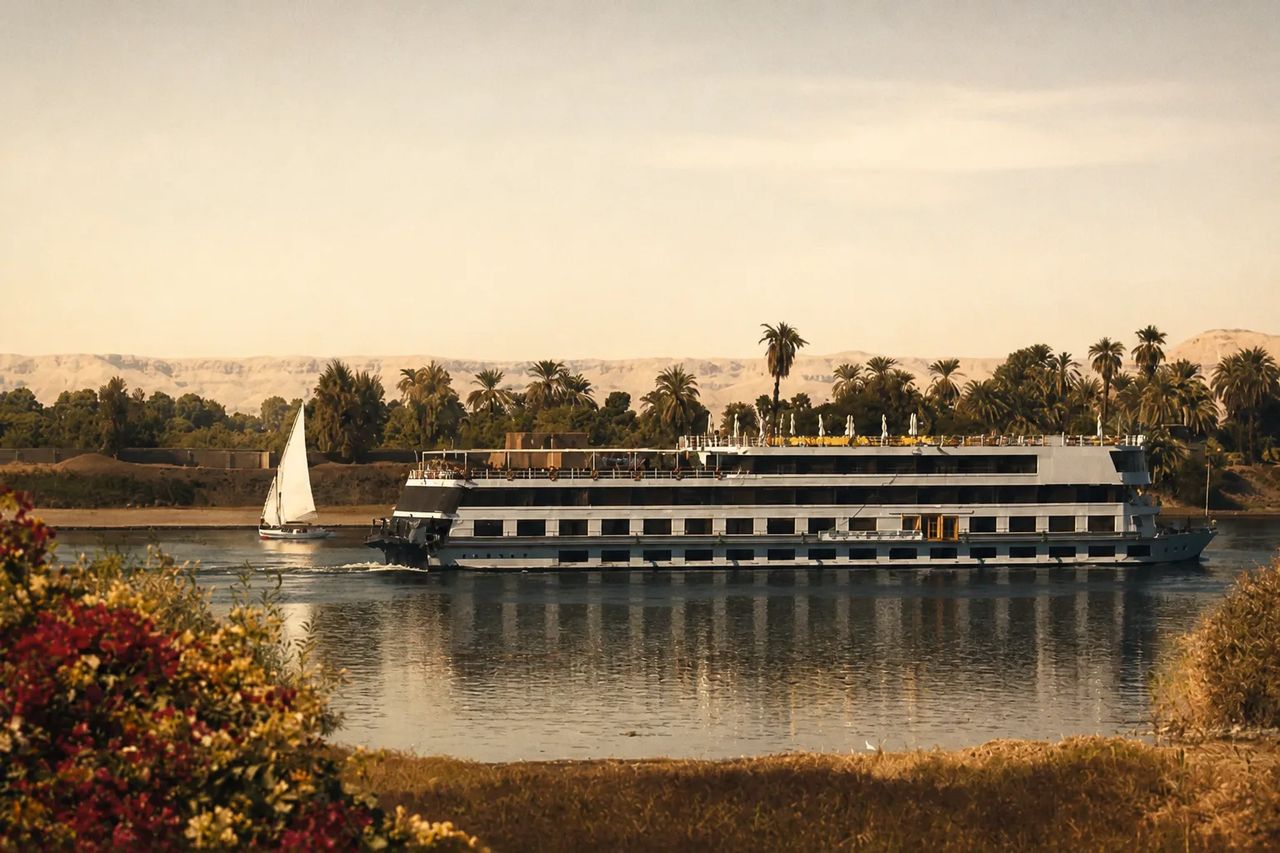
Common, saleable sequences start in Cairo (arrival and archaeological pre/post nights) then move to Luxor for a 3–7 night river cruise south to Aswan, followed by transfer to the Red Sea for diving or resort stay. Typical permutations:
- Classic 3-night Luxor–Aswan or 4-night Luxor–Aswan–Luxor Nile cruises (mid-market ships, 40–80 cabins).
- Luxury river vessels and private dahabiya for high-net-worth or small-group product (12–20 guests) — useful for bespoke shore access and exclusive timings.
- Combining a Nile cruise with a Red Sea liveaboard or shore-based diving/resort segment in Hurghada, Marsa Alam or Sharm El Sheikh.
Operational note: for small groups seeking exclusivity, suggest a private dahabiya or chartering a mid-size Nile vessel; for larger groups, established cruise lines will provide fixed-cabin allocations. For Red Sea diving or shore packages, work with reputable centres in Hurghada, Marsa Alam and Sharm El Sheikh depending on targeted dive sites (e.g., Brothers/Daedalus for advanced diving, Ras Mohammed/Thistlegorm from Sharm).
For detailed vessel and cruise handling, reference our Nile cruise operations and coordinate shore-time allocations early when building shore excursions.
When should I schedule travel to manage weather, crowding and sea conditions?
Seasonality affects both comfort and operational windows:
- Nile cruising: optimal October–April (milder daytime temperatures). Peak winter (Dec–Feb) delivers the highest demand and higher land temperatures in southern Upper Egypt can be cool in mornings.
- Red Sea diving and resorts: year-round operations, with the clearest visibility often in spring (March–May) and autumn (September–November). Summer (June–Aug) is warm with calm seas but higher land heat which affects transfers and excursion timing.
- Ramadan: services, opening hours and meal schedules change—confirm meal planning and excursion start times for guests during Ramadan months.
What transfer and flight logistics need advance planning?
Key routing and transfer points to consider:
- Air gateways: Cairo (CAI) is the primary international entry point; Luxor (LXR) and Aswan (ASW) handle domestic arrivals. Many programmes use a Cairo–Luxor flight or an overnight train for price-sensitive groups.
- Linking Nile and Red Sea: transfers from Aswan/Luxor to Hurghada/Marsa Alam are typically done by short domestic flight via Cairo or by road transfer (Luxor–Hurghada ~4–5 hours). Road transfers require comfortable coaches and midday rest stops in hot months.
- Port and marina handling: allocate time for embarkation clearances, luggage handling and security checks at Nile piers and Red Sea marinas; include buffer times for charter groups.
For transfer planning, engage verified suppliers early — our domestic transfers capabilities include coach, private car and charter flight coordination.
What permits, safety and supplier standards should I require?
Operational risk controls and compliance are non-negotiable:
- Supplier documentation: request copies of vessel licences, crew lists, insurance (public liability, P&I where relevant) and recent safety inspection reports before contracting.
- Diving operators: confirm PADI/SSI or equivalent certification, equipment servicing records, cylinder testing, on-board oxygen and an emergency plan including nearest hyperbaric chambers (Hurghada and Sharm El Sheikh have facilities).
- Permits & timings: Abu Simbel requires either road timings (early morning convoy or private morning slots) or charter flights from Aswan; schedule visits with the supplier to secure the limited morning windows.
- Health & evacuation: ensure suppliers provide an emergency medical plan and medical contacts; for remote liveaboards, include medevac and repatriation coverage in operator contracts.
How should I structure pricing, inclusions and margins?
Price lines to standardise across proposals:
- Base land component: accommodation, lunches/breakfasts, guiding, port fees and local taxes.
- Vessel supplement: single, twin and suite pricing; include crew gratuities (often mandatory) and fuel surcharges in terms and conditions.
- Excursions and upgrades: Abu Simbel flights, hot-air balloon in Luxor, private guides, and Red Sea dive packages (per-dive pricing, rental equipment, nitrox) as optional add-ons.
- Hidden costs to account for: airport departure taxes, port authority fees, and any seasonal surcharges; mark these clearly to reduce contract disputes.
Margin guidance: structure net rates with clear supplier contract terms and cancellation penalties tied to seasonality and charter conditions.
Finally, sustainability and guest expectations: specify reef-friendly sunscreen policy, waste management on vessels and locally sourced provisions where possible. These operational commitments are increasingly important for corporate and high-end leisure clients.
To request supplier availability, lead times and a sample cost grid for standard 4-night Nile + 4-night Red Sea combinations, request our package rates or contact our operations team directly.
Request net rates to start a tailored proposal or contact us for operational support and supplier pre-qualification.