Off-the-Beaten Egypt: Practical Guide for Trade
Practical briefing for tour operators and travel agents on integrating Egypt’s less-visited destinations—White Desert, Siwa, Fayoum and Alexandria—into client programmes. Focus: logistics, seasonality, supplier notes and risk management.
- Licence
- ETAA licence 718 · Category A
- IATA
- #90255546
- Operating
- Cairo · Luxor · Aswan · Red Sea · Alexandria
- Est.
- 1988
How should I structure a short extension to the White Desert for clients?
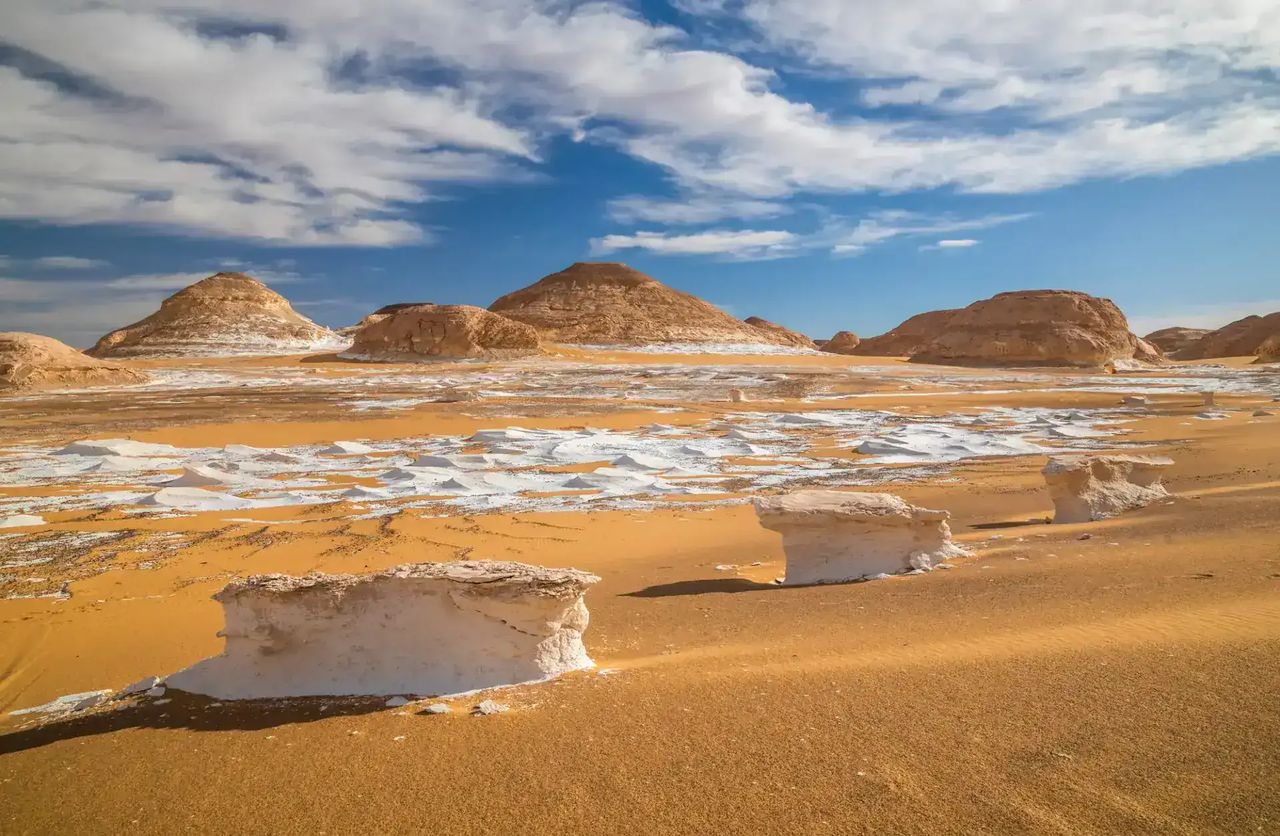
The White Desert (Farafra area) suits 2–3 night extensions from Cairo or a longer desert loop that includes Bahariya and Farafra. Practical structure for trade: day one—overnight transfer and base at Bahariya or Farafra; day two—4x4 exploration of the White Desert National Park with a late-afternoon setup at a fixed desert camp (overnight camping in the park is subject to permit); day three—return via the Crystal Mountain or the Black Desert and transfer back to Cairo or to Luxor/Aswan for a Nile connection.
Key operational points:
- Transfers: plan for long road legs (typical road times: 5–8 hours depending on route and stops). Use experienced desert drivers and private transfers and logistics providers with satellite communications.
- Permits and park procedure: White Desert is managed as a national park—ranger presence, park fees and a park entry permit are required for organised groups. Confirm fees and booking lead times with the supplier.
- Accommodation standards: offer options from basic nomadic-style camps to insulated, ensuite luxury desert tents. For winter departures, advise clients on sub-zero night temperatures and heavy-duty sleeping bags. More off-the-beaten-path options are in hidden gems beyond the pyramids.
What operational considerations apply to Siwa Oasis?
Siwa is remote and culturally distinct; programmes must reflect travel time, security screening and community sensitivities. Road transfers from Cairo take 8–10 hours by private vehicle, typically with a checkpoint at Bahariya. Seasonal light-charter flights to Marsa Matruh (then a 3–4 hour transfer) are used by higher-end groups but require advance sloting.
Supplier and product notes:
- Local guides: engage Siwan guides for cultural interpretation at the Temple of the Oracle, the Mountain of the Dead and Siwa’s salt lakes. Respect requests from local communities regarding photography and dress.
- Activities: include Siwa house-museum visits, salt-bath experiences, 4x4 excursions into the Great Sand Sea and short hikes. For multi-day stays build in rest days—heat and road fatigue are common.
- Risk and contingency: ensure vehicle spares and contingency fuel for remote transfers. Confirm medical evacuation plans for high-risk groups and carry local emergency contacts.
How can Fayoum and Alexandria be used for day trips or short cultural add-ons?
Fayoum and Alexandria are operationally simple to add to Cairo-based programmes but serve different client types. Fayoum is a 90–150 minute drive from Cairo; it is well suited to eco-tourism, birding (Nov–Mar peak), photography and short multi-activity programmes around Lake Qarun, Wadi El Rayan and the pottery village of Tunis. Alexandria is 2.5–3 hours by highway or 2 hours by high-speed train and fits neatly into cultural city extensions.
On-the-ground recommendations:
- Fayoum: work with local eco-lodges and community operators; include Wadi El Rayan waterfalls, Kom Ombo-style rock art sites and birding hides. Emphasise low-impact behaviour and small-group routing to protect reed beds and nesting areas.
- Alexandria: schedule the Bibliotheca Alexandrina early morning, then Catacombs of Kom el-Shoqafa and Qaitbay Citadel. Train timings often determine whether a client does a day trip or an overnight stop.
Which client segments are best suited to these off-the-beaten routes?
Segment mapping helps sales teams position products correctly:
- Active and adventure groups: White Desert and Siwa 4x4 loops, photographic-focused departures with extended daylight timings.
- Culture and heritage travellers: Alexandria short-stays and Siwa cultural immersion with local guide-led visits.
- Luxury and incentive groups: bespoke desert camps, private flights to Siwa, and curated experiences—consider bespoke dining and themed cultural programming.
- Family travel: Fayoum’s eco-lodges and Alexandria’s coastal sites are easier for mixed-age groups; avoid lengthy desert transfers for younger children.
How do I manage supplier selection, sustainability and risk?
Choose suppliers with clear safety procedures, vehicle maintenance records and environmental commitments. For trade partners we recommend contracts that specify vehicle age and insurance standards, guide-to-client ratios, emergency response and waste management in desert camps. Include community-benefit clauses where feasible.
Practical procurement steps:
- Issue an RFP with required standards (4x4 specification, medical kit, fuel margins).
- Request sample itineraries and client references from operators used for day excursions and guided activities.
- For high-end or complex requests use our private tailor-made itineraries capability to secure charter flights, bespoke camps and curated cultural access.
Integration with core Egypt products—Cairo city programmes, Nile cruise connections or Red Sea extensions—improves commercial viability. Time buffers, rest days and clear transfer windows reduce missed connections.
Sample selling lines for agents: “Three-night White Desert loop with luxury tenting and guided geology walk” or “Siwa cultural immersion with local Siwan guide and Great Sand Sea 4x4.” Use these in product sheets, noting precise transfer times, minimum group sizes and that White Desert overnights are subject to permit.
If you would like supplier options, sample itineraries or costing frameworks for any of these routes, request tailored rates or operational support via our team: Request net rates and we will prepare a B2B proposal with lead times, supplier notes and risk mitigations.